


















compost
World Environment Day 2026: Climate Action Starts at Home (It's Worth It!)


Sometimes our customers reach out on socials asking us 'what's the point' of doing small things for the environment when it's all such a mess? They report a kind of low-grade exhaustion when they read the news. The moment you hear the words climate change and feel... something close to nothing. Not because you don't care. Because you care so much, for so long, and it's started to feel like shouting into the void.
Climate fatigue is real. And in 2026, as World Environment Day arrives on 5 June with its theme of Climate Action, we think the most honest thing we can do is start there, with the feeling, not a list of instructions.
So if you've found yourself thinking: what's the point? This is for you.
What Is World Environment Day 2026?
World Environment Day has been running since 1973, it's the United Nations' principal vehicle for encouraging awareness and action for the protection of our environment. This year, it's hosted by Azerbaijan and centred on one of the most urgent conversations of our time: climate change.
The official UNEP campaign puts it plainly: "The question is no longer if change comes, but how we guide it and how fast it happens." Beneath the noise of delay and denial, there are real signals emerging, solar panels stretching across rooftops, cities being redesigned for people, forests being replanted. Positive tipping points are building.
World Environment Day 2026 is a call to step in, move further, and steer a world already in motion. It's not asking for perfection. It's asking for participation.
"The question is no longer if change comes, but how we guide it and how fast it happens." — UNEP, World Environment Day 2026
It's Okay If It Feels Like Too Much
We want to say something that doesn't get said enough: you are allowed to feel overwhelmed.
Climate anxiety, sometimes called eco-anxiety, is a recognised psychological response to the scale and urgency of the climate crisis. It's not a weakness. It's a reasonable response to genuinely alarming information. Researchers have found it's especially prevalent in younger generations, who have grown up with climate change as a constant backdrop.
The problem with overwhelm is that it can tip into paralysis. And paralysis, however understandable, doesn't help anyone. The antidote isn't more information or more urgency. It's action. Specifically: small, concrete, immediate action that keeps you connected to what you actually believe in.
That's what this post is about. Not fixing everything. Just doing something.
Why What You Do at Home Still Matters
It's a fair question. If corporations and governments are the ones driving the bulk of emissions, why does it matter what I do in my kitchen?
Here's our honest answer: the individual vs. systemic change debate is a false binary. Both are true. Both are necessary.
Individual actions matter for three reasons:
- They have real, measurable impact, especially around plastic, food waste, and energy. Household consumption accounts for a significant share of total emissions when you factor in everything we buy, eat, and throw away.
- They signal demand. Every time someone buys a reusable product instead of a disposable one, they're casting a vote for a different kind of market. That vote adds up.
- They protect your sense of agency. When the world feels out of control, doing something, anything, concrete in your own home is one of the few things that can break through the paralysis.
You don't have to choose between personal action and systemic advocacy. You can do both. And even if all you can manage right now is the personal, that's enough.
What You Can Actually Do: 7 Swaps That Make a Difference
We're not going to give you a list of 47 things. Here are seven that are genuinely impactful, genuinely manageable.

1. Switch from plastic food storage to glass or stainless steel
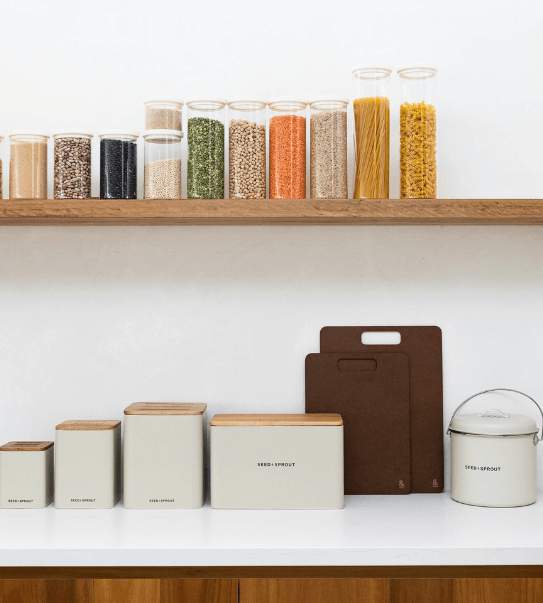
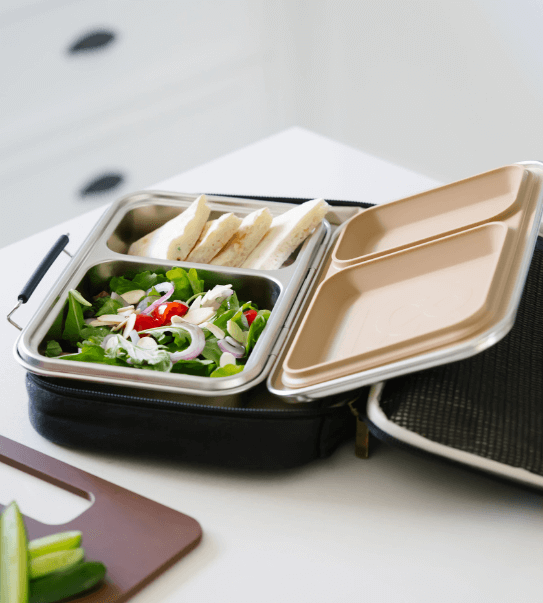
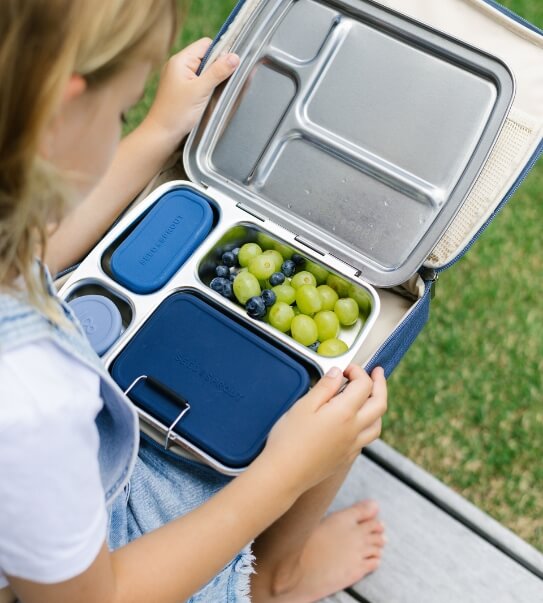
Single-use plastic bags and plastic containers are still one of the most pervasive sources of household plastic waste. Making the swap to glass pantry jars, glass food containers, or stainless steel containers is one of the highest-impact changes you can make in your kitchen and one you only have to make once.

2. Ditch clingwrap
Clingwrap is one of the trickiest plastics to recycle and ends up in landfill almost universally. You can go for Beeswax wraps (there's lots around) or our Resusable Stretch Lids. They cover everything clingwrap does, bowls, cut fruit, cheese, sandwiches, and last for ages

3. Replace plastic utensils
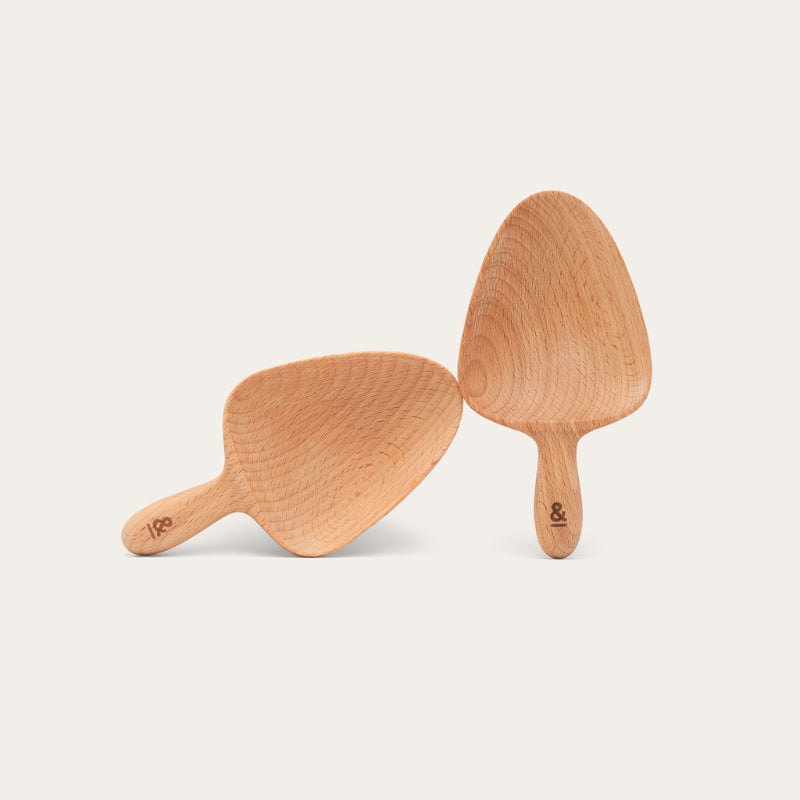
Plastic spatulas, spoons, and stirrers used with hot food are particularly problematic, heat accelerates the leaching of microplastics into food. Silicone utensils and beechwood alternatives are durable, beautiful, and a simple swap.

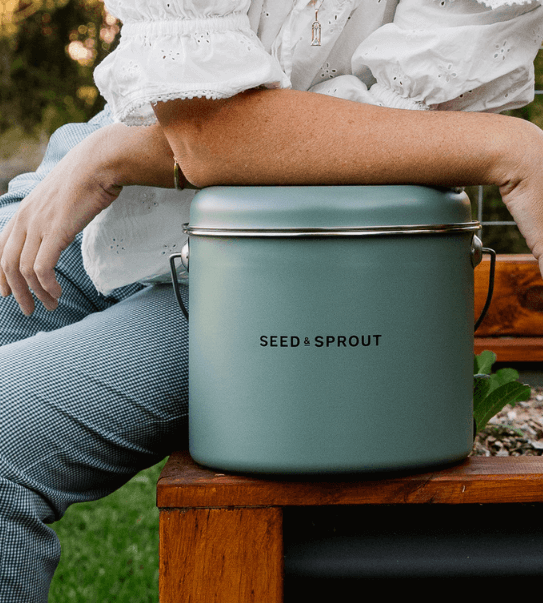
4. Start composting (even if you're in an apartment)
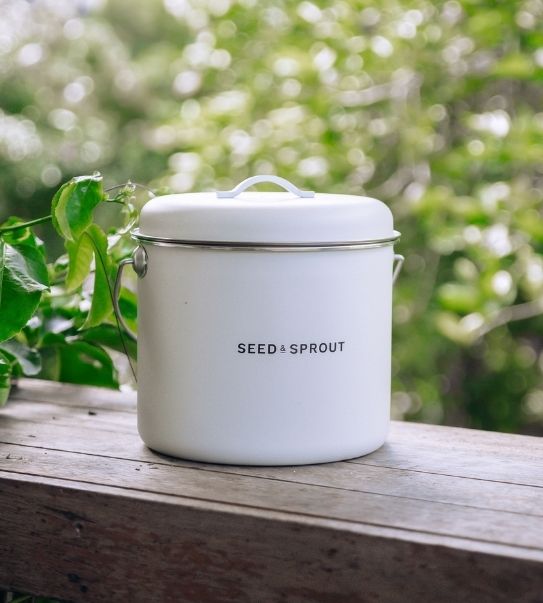
Food waste in landfill produces methane, a greenhouse gas far more potent than CO₂ over the short term. Composting at home short-circuits that entirely. If you're not sure where to start, our complete guide to composting at home covers everything from apartment-friendly options to worm farms.

5. Swap your reusable coffee cup
If your current reusable cup is plastic-lined or made from materials you're unsure about, it might be time for an upgrade. Our reusable coffee cups are built to last and make the daily coffee ritual feel a little more considered.

6. Rethink your produce bags
Those thin plastic bags at the fruit and vegetable section? There's a better option. Reusable produce bags are washable, breathable, and genuinely keep produce fresher for longer.

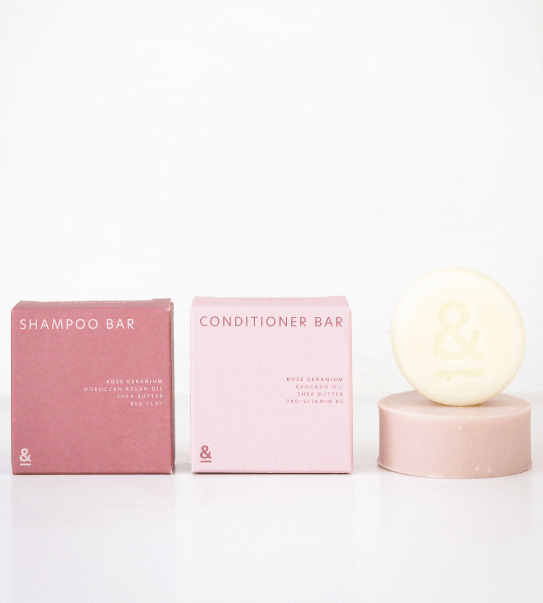
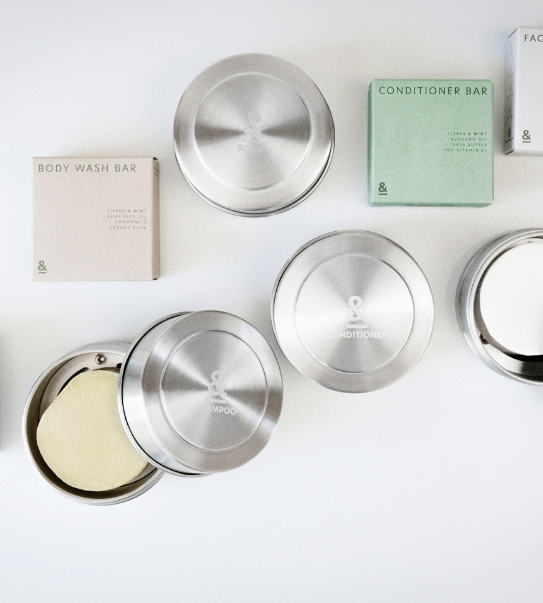
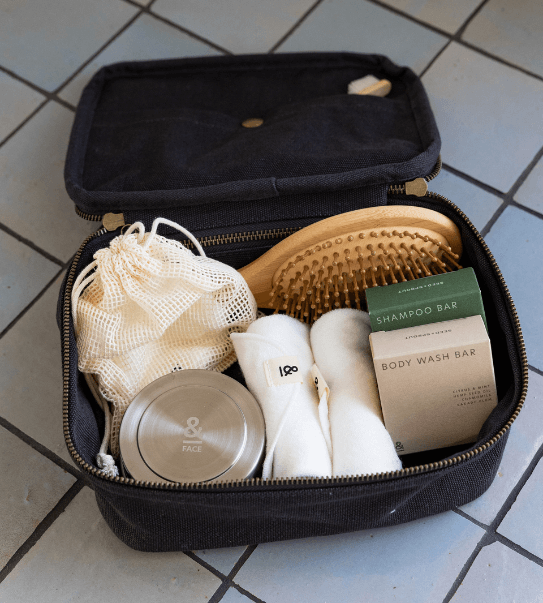
7. Switch to plastic-free haircare
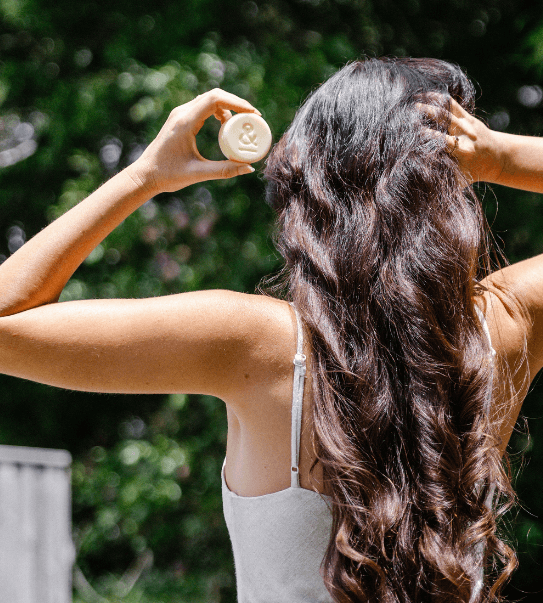
Most conventional shampoo and conditioners come in single-use plastic packaging, and many contain microplastics that go straight into the water system. Browse our plastic-free haircare range for alternatives that are kinder to the planet without compromising on performance.
What to Say to Your Kids
This is a question a lot of parents are sitting with right now and it's one we hear often. How do you talk to children about climate change without terrifying them? How do you be honest without creating anxiety?
Our view: kids don't need the full picture. They need to see that the adults around them are doing something.
Here are a few framings that work:
-
"We're the kind of family that looks after things." That's it. Full stop. You don't need to explain the whole climate crisis to a seven-year-old. You just need to demonstrate care, for your home, your food, your waste.
-
Point to the concrete. The resusable stretch lids. The compost bin. The reusable bags. "We use these because we look after the planet." No apocalypse required.
-
Emphasise agency. Children are remarkably motivated by the feeling that they can do something. Let them help sort the recycling. Make it a ritual, not a lecture.
-
Don't perform optimism you don't feel. Kids sense dishonesty. It's okay to say "some things are hard right now, and lots of people are working to fix them, including us."
"The best thing you can tell a child about the environment: we're the kind of family that looks after things."
A Note on Climate Fatigue
If you've made it this far and you're still feeling that quiet heaviness, the "what's even the point" feeling, we want to say something more:
You don't have to fix everything today. You don't have to feel hopeful all the time. You don't have to be perfectly consistent or make every swap at once.
You just have to do something. And then do it again tomorrow.
The cumulative effect of millions of people making better choices, even imperfect ones, even reluctant ones, is real. The tipping points that UNEP is talking about, the ones building in solar, wind, urban design, reforestation m they're being driven by exactly this kind of quiet, persistent, individual-level shift in what people want and what they refuse to accept.
Your kitchen matters. Your choices matter. Not because they save the world alone. Because they keep you connected to what you believe in and that's what makes change possible.
Shop Sophie's Favourites
This World Environment Day, we've brought together the products we believe in most — the ones that make the biggest difference, the ones that are genuinely built to last.
Browse the collection: https://seedsprout.com.au/collections/sophies-favourites
— — —
Related reads:
How to compost at home: The complete guide
Why stainless steel mixing bowls are the ultimate kitchen upgrade
Plastic-free in 7 days: The complete guide to reducing plastic in your kitchen